
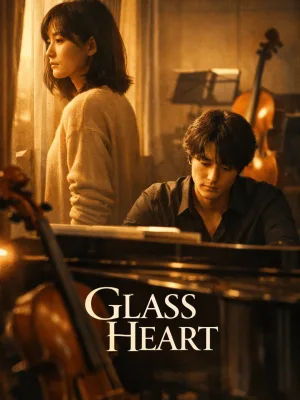
“Glass Heart” stands out as one of Netflix’s most ambitious ventures in the realm of Japanese dorama, presenting a storyline that goes beyond the typical confines of musical drama. Adapted from Mio Wakagi’s novel, the series weaves a profoundly human tale about redemption, innate talent, and the sacrifices required to ascend in the music industry.
Advertisements
Plot and Character Development
The core premise may be recognizable but is executed with finesse: Akane Saijo, a gifted university drummer, watches her aspirations collapse when she is wrongfully ousted from her band just before their debut. The screenplay cleverly sidesteps clichés by introducing Naoki Fujitani, a talented yet introverted musician who sees Akane’s potential and invites her to be part of TENBLANK, his new musical project.
What differentiates “Glass Heart” from other shows in the genre is its sophisticated examination of the music industry’s intricacies. The series does not idealize the road to success but delves into the rivalries, tensions, and pressures that accompany artistic growth. The conflict between TENBLANK and OVER CHROME, a band fronted by the charismatic Toya Shinzaki, adds an extra layer of depth to the narrative without relying on shallow antagonism.
Direction and Visual Aesthetics
Directed by Kohtaro Goto and Kensaku Kakimoto, “Glass Heart” raises the bar for musical doramas. The live performance scenes are remarkably cinematic, featuring over 5,000 extras and a 12-camera setup to capture the vibrancy and intensity of the performances. This level of production, seldom seen in Japanese series, creates a palpable authenticity that immerses the audience in the live experience.
The cinematography employs warm hues during personal scenes, contrasting with the dynamic and colorful lighting of the musical segments. This visual duality perfectly reflects the two realms the characters navigate: the personal and the performative.
Acting and Musical Integrity
Takeru Satoh delivers one of his most layered performances as Naoki Fujitani, showcasing a blend of musical brilliance and emotional depth. His involvement extends beyond acting, as he also takes on the role of executive co-producer, ensuring the project’s artistic integrity.
Yu Miyazaki shines as Akane, effectively portraying a mix of determination and vulnerability. Her self-discovery journey is compelling, particularly as she balances band loyalty with her personal aspirations. The supporting cast, featuring Keita Machida and Jun Shison as the guitarist and keyboardist, respectively, adds to the authentic group dynamic.
A key element of the series is the cast’s dedication to musical authenticity. All principal actors underwent extensive training on their instruments, resulting in performances that do not rely on dubbing or editing techniques.
Soundtrack and Musical Components
The involvement of Yojiro Noda, the lead singer of the renowned band RADWIMPS, in crafting the original songs significantly enhances the series’ musical quality. “Crystalline Echo,” featured in the teaser, exemplifies how the songs serve not just as entertainment but as extensions of the narrative that reveal the characters’ emotional journeys.
The soundtrack beautifully blends elements of contemporary Japanese rock with experimental influences, reflecting the innovative spirit of the fictional band TENBLANK. Each piece is thoughtfully woven into the story, ensuring that the musical moments feel integral to the overall narrative.
Themes and Emotional Resonance
“Glass Heart” delves into universal themes through the unique perspective of Japanese music culture. The notion of second chances resonates deeply, not only for Akane but for all band members who carry their own scars and unfulfilled dreams.
The series also sensitively addresses the pressures within the entertainment field, including manipulation by influential producers and the personal toll of fame. These elements add weight to the narrative without sacrificing moments of levity and human connection.
Key Highlights
The standout feature of “Glass Heart” is its ability to balance spectacle with intimacy. The grand performance scenes are beautifully contrasted with quieter moments of introspection, creating a narrative rhythm that reflects the series’ musical compositions.
The depiction of artistic creativity is particularly well-crafted, showcasing both bursts of inspiration and times of creative struggle. The series refrains from idealizing the artistic process, portraying it as a demanding pursuit that requires commitment and sacrifice.
Final Thoughts
“Glass Heart” positions itself as a landmark production in the Japanese musical genre, fusing high-quality production with emotive storytelling and compelling performances. The series appeals to both drama enthusiasts and music lovers, providing a rich and layered experience.
With its mature exploration of music industry challenges and focus on developing multidimensional characters, “Glass Heart” is poised to be one of the most noteworthy series of 2025. It celebrates the transformative power of music and the resilience of the human spirit in overcoming challenges.
A série representa um marco na evolução dos doramas musicais, provando que é possível criar entretenimento de massa sem comprometer profundidade artística ou autenticidade emocional.