
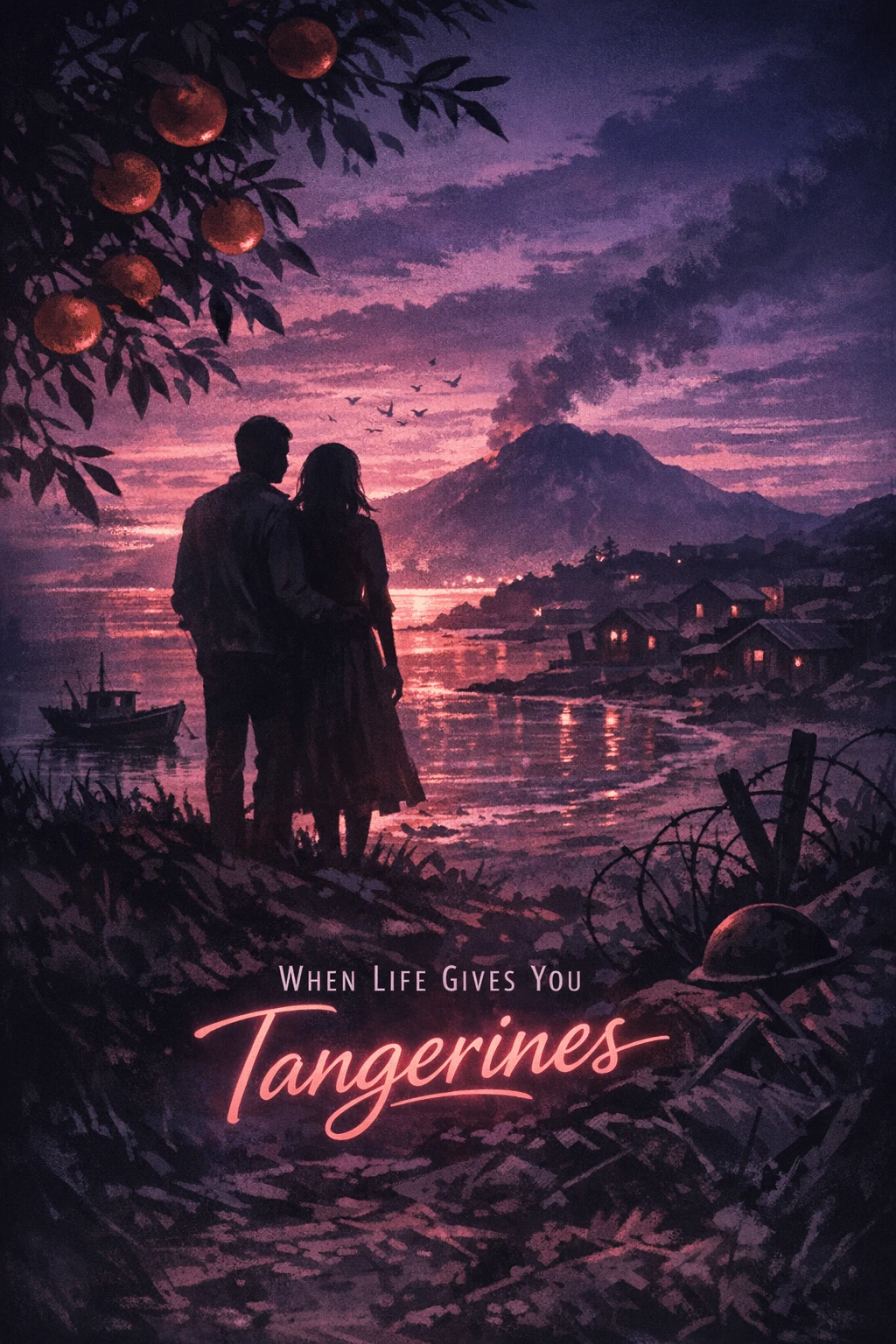
Hello, everyone! How’s it going? Today, I want to share my thoughts on a series that truly left me emotionally shattered – “When Life Gives You Tangerines” on Netflix. What an incredible title! You know that feeling when you expect to watch a light-hearted romance set on a tropical island, only to be hit with an emotional freight train? Prepare your tissues (and maybe grab a whole box)!
Advertisements
**The Island of Jeju and Its Hidden Truths**
The narrative unfolds on Jeju Island during the 1950s, introducing us to Ae-sun (IU) and Gwan-sik (Park Bo-gum), two young individuals raised together in a time when dreaming was a luxury that the less fortunate could hardly afford. Ae-sun is a determined girl with aspirations that extend beyond her village, raised by a resilient mother until an unforeseen tragedy alters their lives.
Folks, the series brilliantly captures the harsh realities of life in Jeju. Ae-sun witnesses her mother, Gwang-rye, struggle for survival following the death of Ae-sun’s father. Gwang-rye presents a tough facade but is wholly devoted to Ae-sun, striving to provide her with the best life possible. This portrayal authentically reflects how women of that era bore the weight of the world.
**IU and Park Bo-gum: An Ageless Connection**
Have you noticed IU and Park Bo-gum returning to the screen after six and five years, respectively? Their comeback is nothing short of spectacular! The actors are so genuine that it’s palpable. They inhabit their characters fully; every emotion feels sincere and deeply felt. IU’s performance was particularly striking. She doesn’t just act; she embodies her character. Watching her depict a woman with dreams of becoming a poet, struggling against societal and economic constraints, is incredibly poignant.
Gwan-sik, portrayed by Park Bo-gum, is a sincere and hardworking young man. He is not very talkative, yet his love and respect for Ae-sun are evident. His affection is expressed not through grand gestures but through consistent acts of care and protection that endure through the years.
**A Surprising Non-Linear Storytelling**
The narrative unfolds in a non-linear style, chronicling the lives of Ae-sun, Gwan-sik, and their children, split between Dodong-ri on Jeju Island and Seoul from the 1950s to the 2000s. This time structure is exceptional! Earlier events are revisited in later episodes, providing further context that highlights the connections among various events and characters.
It’s akin to assembling an emotional puzzle, gradually revealing how past decisions shape the present, how fleeting moments of happiness evolve into cherished memories, and how tragedies can define entire lifetimes.
**The Haenyeo: Symbols of Female Resilience**
One of the most remarkable aspects of the series is its depiction of the haenyeo, women who dive in the waters off Jeju Island to gather seafood. The haenyeo have a rich history spanning 1,000 years in Korea. In “When Life Gives You Tangerines,” Ae-sun’s mother is part of this community, diving for abalone and seaweed.
Witnessing these women risk their lives daily in frigid waters to support their families powerfully illustrates female strength. The relationship between Gwang-rye and Ae-sun is both heartbreaking and beautiful. Gwang-rye’s sacrifices for her daughter, striving tirelessly as a haenyeo to spare Ae-sun from that life, reflects the lengths to which mothers will go for their children.
**Navigating Love Amidst Harsh Realities**
As love flourishes between Ae-sun and Gwan-sik, they take their first courageous step together. However, their romantic journey is met with significant challenges. And what challenges they face! The series does not romanticize poverty or offer simplistic solutions. It delves into the social dynamics and gender roles imposed on women, a theme that resonated deeply with me. The societal expectations that often confine women and limit their choices are portrayed with precision.
Watching Ae-sun grapple with her dreams of becoming a poet while reality weighs her down is heart-wrenching. The series intricately explores motherhood and how generational trauma influences our lives. Ae-sun’s journey embodies the struggle between breaking free from societal expectations and confronting harsh realities.
**An Unexpected Heartbreaking Tragedy**
Without revealing too much, brace yourselves for the final episodes that deliver both closure and heartbreak. The 1997 IMF crisis jeopardizes the Yang family’s stability. Eun-myeong’s imprisonment compels Gwan-sik and Ae-sun to take desperate actions, leading Gwan-sik to gamble on a failing restaurant. Just as the family begins to rebuild, a tragedy strikes – Gwan-sik is diagnosed with cancer.
I was not prepared for this moment. In a devastating farewell, he passes away in Ae-sun’s arms, leaving behind a legacy of love. I sobbed for an entire hour. This kind of ending compels you to reflect on life and the importance of cherishing every moment with loved ones.
**A Worldwide Sensation That Touches Hearts**
This series achieved remarkable success both domestically and internationally, and it’s easy to see why. On the review aggregator Rotten Tomatoes, 100% of 6 critics’ reviews are positive, boasting an average rating of 9.5/10. Time magazine lauded the series for its “devastatingly profound” narrative, showcasing not only “the story of a family” but also “Korea’s journey of modernization from the post-war era to the present.”
And check this out: Netflix Korea capitalized on the series’ popularity through intellectual property collaborations aimed at drama fans. They partnered with Yuhan-Kimberly to launch a limited edition ‘Kleenex Moisturizing Essence Lotion’, complete with packaging featuring the drama; this product sold out during its pre-sale. They even created themed tissues! They knew we would be shedding tears anyway.
**The Aesthetic Splendor of Jeju**
The visuals in this series are absolutely breathtaking. Each frame feels authentically immersive, as if stepping into a living, breathing world rather than merely observing a drama unfold. With a substantial budget and an all-star cast filming on location, the series evokes nostalgia while being beautifully shot and lit.
From the very beginning, there’s a scene where a constellation in the night sky transforms into the yellow helmets of the haenyeo divers floating in the sea. It’s simply stunning. The night scenes are crisp and detailed, bathed in a golden glow. It’s pure cinematic artistry!
**For Those Willing to Experience Deep Emotions**
“When Life Gives You Tangerines” transcends the typical drama series. It offers a profoundly emotional exploration of love, sacrifice, and the unsaid feelings that unite families. Unlike conventional dramas that rely on exaggerated conflicts and predictable resolutions, this series thrives on authentic, raw storytelling, making each episode feel like a heartfelt letter to anyone who has ever struggled with understanding or appreciating their parents.
If you’re in search of a series that will touch your heart and leave a lasting impression, this is the one for you. But do prepare yourself emotionally. It’s rare for films or shows to make me cry, yet one episode midway through succeeded in doing just that. But that last episode… I spent the entire hour and a half in tears as if I were mourning my own life – as if I had just witnessed it flash before my eyes.
**Understanding the Title’s Significance**
The English title, When Life Gives You Tangerines, was introduced on January 30, 2023, and plays on the proverb “When life gives you lemons, make lemonade”; Jeju Island’s fruit of choice is tangerines, however. IU, the pop idol and leading actress, explains that the English title symbolizes using the sourest tangerines life throws your way to brew a warm, comforting tea.
It’s a beautiful metaphor for transforming life’s adversities into something that nourishes and uplifts the spirit. And indeed, this series accomplishes just that!